
Carriers
What Is a Lapping Carrier? Products, Uses and Replacement References
A lapping carrier is a workholding part used to locate and separate components during double-side finishing. Its outside geometry interfaces with the machine, while its pockets define where the workpieces sit. It is not the lapping plate or abrasive doing the finishing. Recognising that role helps a buyer identify the right product family before sending a replacement enquiry.
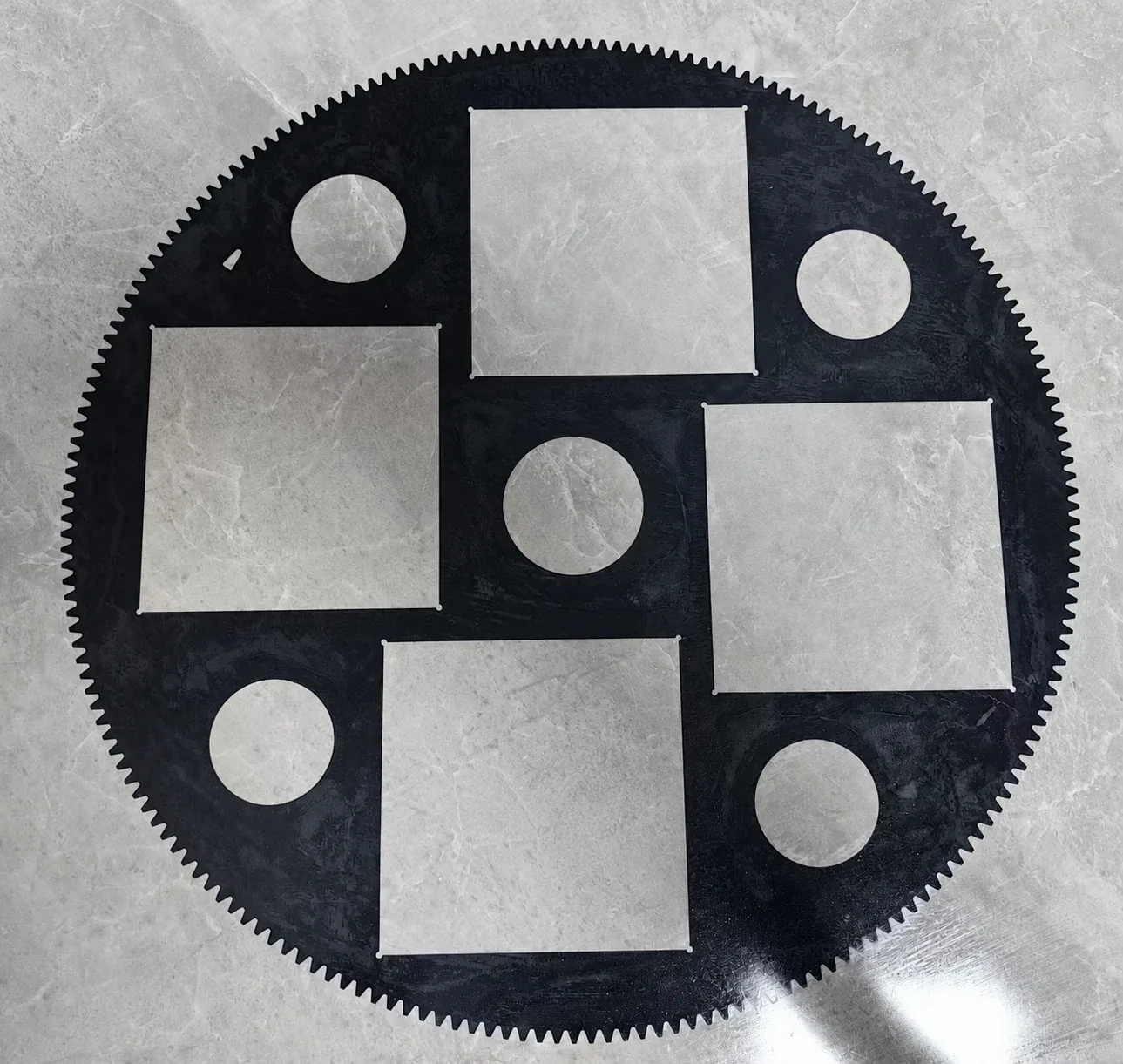
Why the outer teeth matter
The toothed outline is an equipment interface, not the complete definition of the product. A carrier is not purchased as an ordinary power-transmission gear just because it has teeth. Its machine reference, external geometry and thin form need to describe the required fixture. A catalogue image can identify the general family; it should not be used to infer the exact tooth profile or to certify fit on an unconfirmed machine.
What the internal pockets identify
The openings describe workpiece layout, profile and contact boundaries. Circular wafers and shaped components do not share one universal pocket specification. In a composite construction, the finished contact boundary can differ from the metal-body opening. A replacement purchase therefore needs more than a count of visible holes. Use the agreed drawing or existing part reference to identify the actual pockets and any orientation features.
How it differs from other finishing consumables
A plate supplies a working surface; a polishing-face pad belongs to that surface; a holding pad or template belongs to a different work-holding arrangement. These are not alternative names for the same disc. When browsing a supplier range, decide which role the requested item performs before comparing materials or prices. An enquiry for a double-side carrier should not be answered with a single-side holding pad simply because both are circular.
Which construction to enquire about
Metal, resin or polymer, and composite carriers are distinct supply directions. No single family is the best choice for every workpiece and environment. NewwaySmart’s catalogue separates these categories so buyers can begin with the relevant reference, then confirm the material, layout and quantity privately. A useful starting enquiry includes the existing carrier reference and intended part; detailed confidential process parameters are not required just to identify the product family.
Buyer questions
Is it also called a planetary carrier?
The terminology is used for this type of workholding carrier. Confirm the actual machine and product reference rather than relying on a name alone.
Is a carrier the same as a lapping plate?
No. It locates the components; the plate is a different part of the finishing arrangement.