Spherical workpieces · Epoxy & Resin Carriers

Custom Polymer Carriers for Sphere Processing

Drawing-led retaining layouts for spherical workpieces in a compatible sphere-processing setup—not a flat-wafer carrier substituted by name.
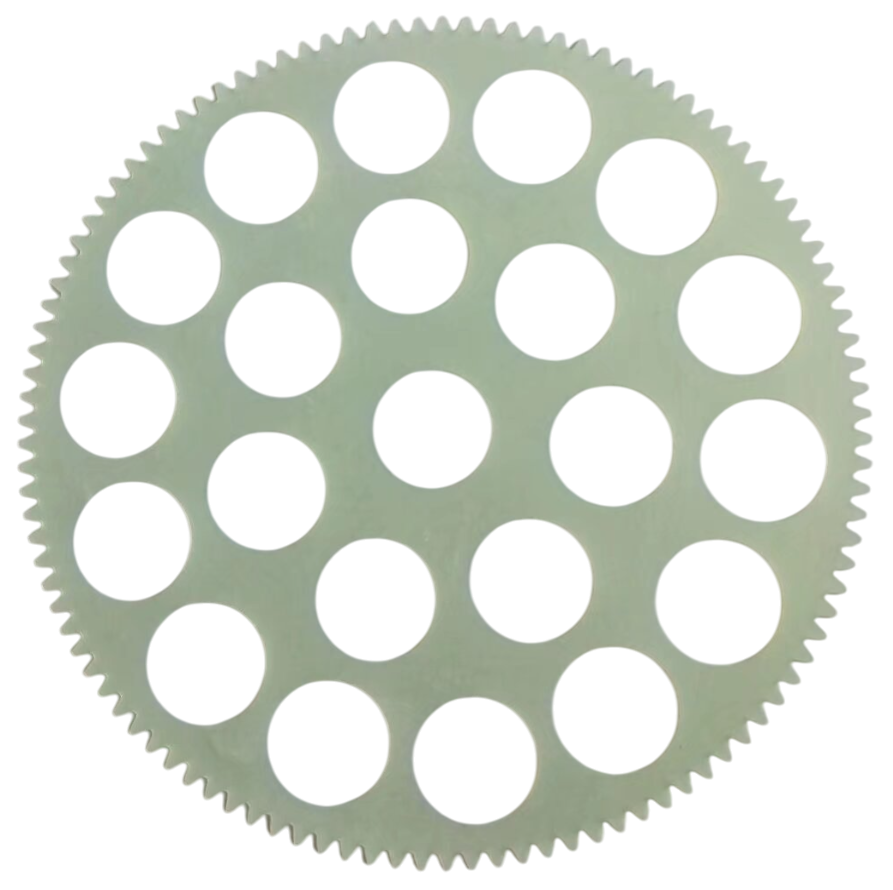
Laminate carrier with numerous circular pockets
Circular-pocket example only; a sphere-processing profile requires a separate drawing.

HOW THIS PRODUCT IS JUDGED

Connect the physical product to its process function.

The sphere must be able to move as intended between the working surfaces. Pocket profile, carrier thickness and plate geometry must be reviewed together to avoid trapping the ball or leaving an uncontrolled contact band.

SELECTION FOCUS

Questions that change the direction.

  • Sphere material, diameter range and incoming roundness
  • Machine and working-plate geometry; intended ball motion
  • Permitted contact band, abrasive and cleaning requirements

RFQ & DRAWING FIELDS

Evidence needed before release.

  • Pocket profile through the thickness, pitch and minimum web
  • Carrier material, tooth profile and drive clearance
  • Sample-load plan and motion check before abrasive trials
  • Measurement of diameter distribution, roundness and surface defects

PRODUCT REFERENCE

Confirm the configuration for your part.

Circular-pocket laminate example only; a sphere-processing profile requires a separate drawing.Do not submit confidential customer drawings until a secure project channel is confirmed.

FROM SELECTION TO FIRST ARTICLE

A practical review sequence for this product family.

01

Construction choice

Identify the resin, engineering polymer or laminate direction rather than treating every non-metal carrier as the same material.

02

Pocket definition

Use the controlled workpiece outline, loading direction and process conditions to agree clearance.

03

Trial review

Record dimensional checks and observations of contact marks, wear and loading behaviour under the agreed conditions.

Order-specific dimensions, material grades and acceptance values are recorded in the approved specification. This sequence is selection guidance, not a pre-validated process recipe.

PUBLIC CLAIM BOUNDARY

Typical direction is not a performance guarantee.

Dimensions, materials, removal rate, roughness, life and compatibility are published only when supported by an approved drawing, material record or project-specific validation. Unverified label examples, third-party photographs and customer pricing remain internal references.

RELATED TYPES IN EPOXY & RESIN CARRIERS

Compare neighbouring constructions.

Laminate carrierG10 / FR4 Laminate CarriersMachined laminate carrier directions for protected contact and economical process development where their stiffness and chemistry fit.Engineering polymerPEEK, PI, PPS & PEI Carrier DirectionsEngineering-polymer carrier directions screened around temperature, chemistry, stiffness, wear and workpiece contact.Polymer carrierPOM, PA, PVC & Cast-Polymer CarriersApplication-led polymer workholding for contact-sensitive parts and defined chemical environments.Cutting-insert carrierC-Style Insert Lapping CarriersDrawing-controlled epoxy or laminate carriers for CNMG, CCMT and related 80-degree rhombic insert families.

DRAWING · SAMPLE · PROCESS EVIDENCE

Start with what is known. Keep assumptions visible.

Prepare the first review →